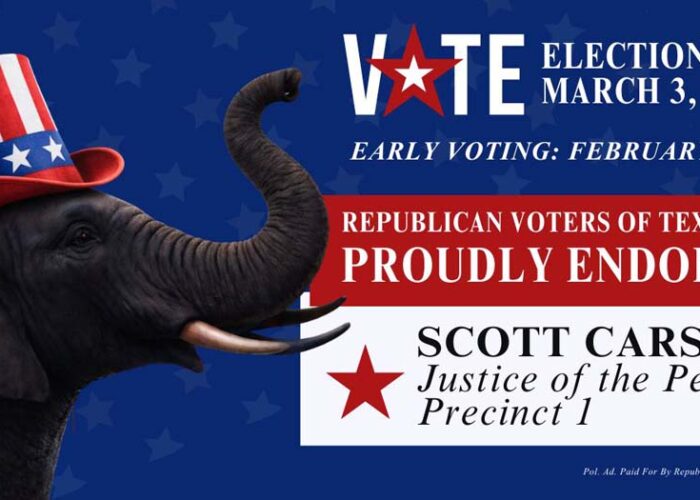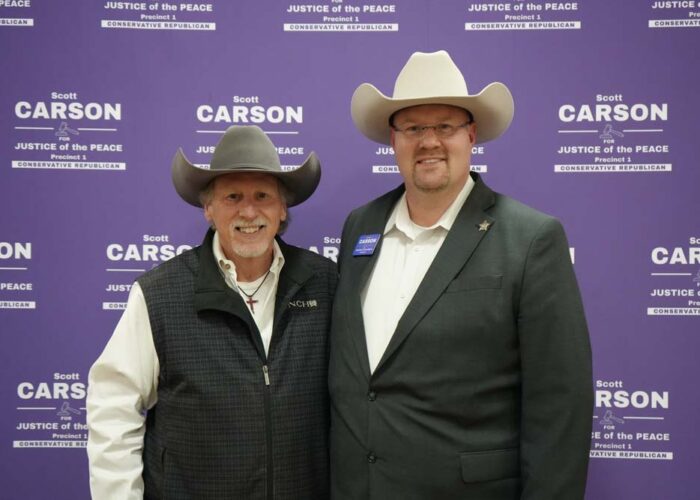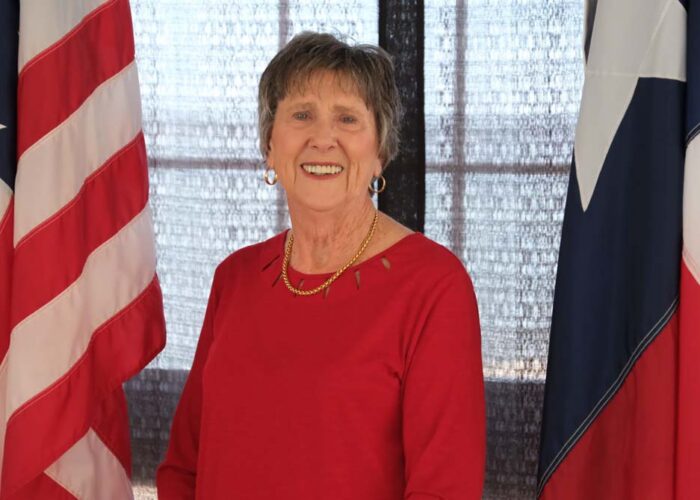
Scott Carson
for JUSTICE of the PEACE
Precinct 1
Christian Conservative Republican


Scott Carson
My adult life has been focused on serving others. I was a Correctional Officer (TDCJ), a Loss Prevention Specialist and Manager/Trainer, a Deputy Sheriff with the Montgomery County Sheriff’s Office, and a federal employee with the United States Postal Service. Currently, I am back at the Montgomery County Sheriff’s Office as a civilian employee.
I have built a reputation for treating others with fairness, dignity, and respect. By learning to listen and stay calm under pressure, I consistently demonstrate the core judicial qualities of temperance and impartiality.
Why Scott Carson?
I am a former President of the Willis Youth Athletic Association, a former board member, and a coach. Sara and I were very active members of the Willis High School Wildkat Band Boosters. I enjoy attending community events and fundraisers, and I am always looking for opportunities to serve.
I feel I represent exactly what a judge should be: a lifelong public servant who genuinely cares about our community in Willis, Montgomery, Conroe, and all of Montgomery County.


Dedication, Hard work and Community
I am not looking for endorsements or accolades; rather, I am gathering the knowledge necessary to become the most effective Justice of the Peace for this community. One thing my research has made clear is that the staff of the current JP1 office is second to none and I am fortunate to inherit such a strong foundation of support.
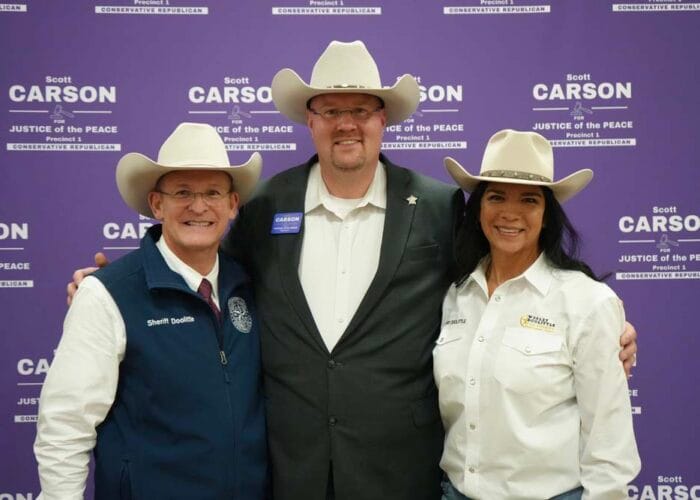
Both former and current JPs have graciously shared their experiences, advice, and knowledge with me. Additionally, multiple law enforcement leaders have offered their support and mentorship. I am arming myself with facts and insight so that I may build a foundation for success as your next Justice of the Peace in Precinct 1.